

Understanding Information Systems in Business
Information systems (IS) are integrated sets of components for collecting, storing, and processing data, and for delivering information, knowledge, and digital products. In a business context, these systems serve as the backbone for decision-making and operational efficiency. Information systems can range from simple tools like spreadsheets to complex enterprise resource planning (ERP) systems that manage all aspects of a business. Their primary purpose is to support business processes, enhance communication, and facilitate data-driven decision-making.
In today’s fast-paced business environment, the relevance of information systems cannot be overstated. For small organizations, these systems can level the playing field, providing access to tools and data that were once only available to larger enterprises. For larger organizations, information systems streamline operations, reduce costs, and improve customer satisfaction. The ability to analyze vast amounts of data quickly and accurately is crucial for maintaining a competitive edge.
Applicability Across Industries
Information systems are applicable across a wide range of industries and situations. Here are some key sectors where their impact is particularly significant:
-
Retail
Retailers use information systems to manage inventory, track sales, and analyze customer behavior. This data helps them make informed decisions about stock levels and marketing strategies.
-
Healthcare
In healthcare, information systems are vital for patient management, scheduling, and electronic health records (EHR). They improve patient care and streamline administrative processes.
-
Manufacturing
Manufacturers rely on information systems for supply chain management, production planning, and quality control. These systems help optimize operations and reduce waste.
-
Finance
Financial institutions utilize information systems for transaction processing, risk management, and regulatory compliance. They enhance accuracy and speed in financial reporting.
-
Education
Educational institutions employ information systems for student enrollment, grading, and curriculum management. They facilitate communication between students, faculty, and administration.
In each of these industries, the ability to gather and analyze data effectively can lead to improved decision-making and operational efficiency. For auto owners, understanding how information systems function within these contexts can provide insights into how their personal data, from maintenance records to driving habits, can be leveraged for better service and vehicle performance.
The relevance of information systems extends beyond just operational efficiency; they are also crucial for strategic planning. Organizations that utilize data analytics can identify trends, forecast future demands, and make proactive decisions that align with their business goals. In an era where data is often referred to as the new oil, the ability to harness and analyze this resource is invaluable for both small and large businesses alike.
How Information Systems Function in Business
Information systems are composed of several key components that work together to support business processes and enhance decision-making. These components include hardware, software, data, procedures, and people. Each plays a critical role in ensuring that information flows smoothly throughout an organization, enabling timely and informed decisions.
Key Components of Information Systems
-
Hardware
This includes physical devices such as computers, servers, and networking equipment. Hardware is essential for storing and processing data, as well as for facilitating communication among users.
-
Software
Software encompasses applications and programs that process data. This can range from simple applications like word processors to complex ERP systems that manage multiple business functions.
-
Data
Data is the core of any information system. It includes all the information collected, processed, and stored by the system. Effective data management is crucial for accurate decision-making.
-
Procedures
Procedures refer to the policies and processes that govern how data is collected, processed, and disseminated. Well-defined procedures ensure consistency and reliability in operations.
-
People
This includes everyone who interacts with the information system, from IT staff to end-users. Training and user engagement are vital for maximizing the effectiveness of the system.
Role in Supporting Business Operations
Information systems play a pivotal role in supporting and improving business operations by automating processes, facilitating communication, and providing analytical tools. Here are some ways they contribute to operational efficiency:
-
Automation of Routine Tasks
Information systems can automate repetitive tasks, such as data entry and report generation. This not only saves time but also reduces the likelihood of human error.
-
Enhanced Communication
These systems enable real-time communication among employees, departments, and even external stakeholders. Improved communication leads to faster decision-making and collaboration.
-
Data Analysis and Reporting
Information systems provide analytical tools that allow businesses to analyze data trends and generate reports. This capability supports strategic planning and informed decision-making.
-
Customer Relationship Management
Many businesses use information systems to manage customer interactions, track sales, and analyze customer behavior. This helps in tailoring services to meet customer needs effectively.
Advantages and Potential Drawbacks
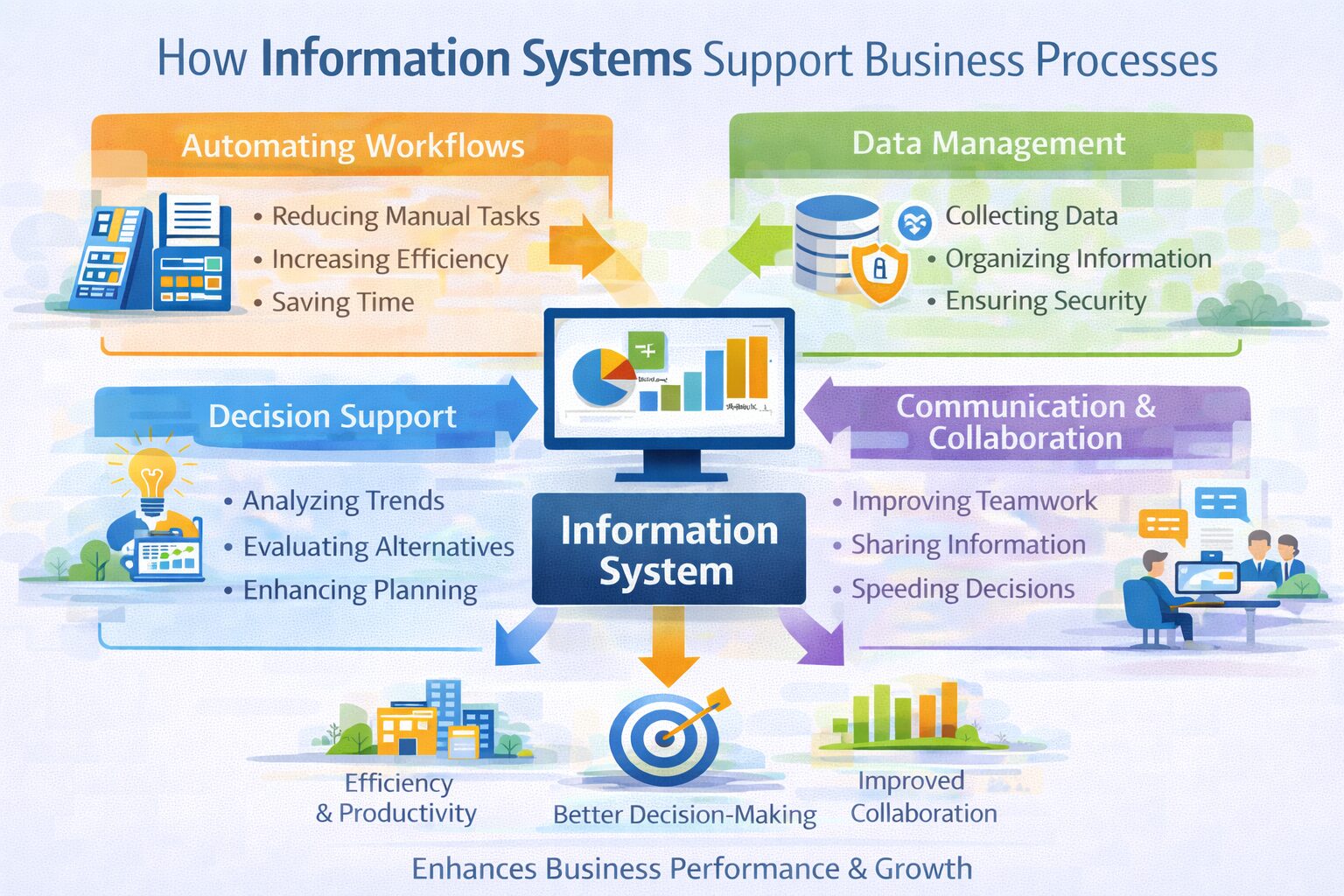
While information systems offer numerous advantages, they are not without their challenges.
-
Advantages
-
Increased Efficiency
By automating processes and improving communication, information systems can significantly enhance operational efficiency.
-
Better Decision-Making
Access to real-time data and analytical tools allows for more informed and timely decisions.
-
Competitive Advantage
Organizations that effectively leverage information systems can gain a competitive edge by responding quickly to market changes and customer needs.
-
-
Potential Drawbacks
-
High Implementation Costs
Setting up an information system can require significant investment in hardware, software, and training.
-
Data Security Risks
With increased reliance on digital systems comes the risk of data breaches and cyberattacks, necessitating robust security measures.
-
Complexity
As systems grow more complex, they may become difficult to manage and maintain, leading to potential operational disruptions.
-
Real-World Applications
Information systems influence efficiency, decision-making, and competitiveness across various industries. Here are some examples:
-
Supply Chain Management
Companies like Amazon utilize sophisticated information systems to manage their supply chains. Real-time tracking and data analysis enable them to optimize inventory levels and reduce delivery times.
-
Healthcare Management
Hospitals use information systems to manage patient records and streamline operations. Electronic health records (EHR) systems improve patient care by providing healthcare professionals with immediate access to patient data.
-
Financial Services
Banks and financial institutions rely on information systems for transaction processing and fraud detection. These systems enhance security and improve customer service by providing quick access to account information.
In conclusion, the role of information systems in business is multifaceted and critical for modern operations. Their ability to streamline processes, enhance decision-making, and provide a competitive edge makes them indispensable in today’s business landscape.
Assessing Information Systems for Business Needs
Evaluating an information system is crucial for ensuring that it meets the specific needs of a business. A thorough assessment can help organizations avoid costly mistakes and maximize the benefits of their investment. Below are key evaluation criteria and steps for implementation, integration, and improvement.
Evaluation Criteria
When assessing an information system, consider the following criteria:
| Criteria | Description |
|---|---|
| Cost | Evaluate both initial setup costs and ongoing operational expenses. This includes hardware, software, maintenance, and training costs. |
| Scalability | Determine whether the system can grow with your business. A scalable system can accommodate increased data volume and user load without significant additional investment. |
| Compatibility | Check if the system can integrate with existing tools and technologies. Compatibility reduces the need for extensive retraining and additional investments in new software. |
| Security | Assess the security features of the system, including data encryption, access controls, and compliance with industry regulations. A secure system protects sensitive business and customer data. |
| User Adoption | Consider how user-friendly the system is and whether employees are likely to adopt it. High user adoption rates lead to better data accuracy and operational efficiency. |
Steps for Implementation
Implementing an information system involves several critical steps. Following these steps can help ensure a smoother transition and better outcomes:
-
Define Objectives
Clearly outline what you hope to achieve with the new system. This could include improving efficiency, enhancing customer service, or gaining better insights from data.
-
Conduct a Needs Assessment
Gather input from stakeholders to identify specific needs and requirements. This assessment should include input from various departments to ensure a comprehensive understanding of needs.
-
Research Solutions
Explore different information systems that meet your criteria. Consider vendor reputation, customer reviews, and case studies to gauge effectiveness.
-
Budgeting
Develop a budget that includes all costs associated with the system, including hardware, software, training, and ongoing maintenance.
-
Implementation Planning
Create a detailed implementation plan that outlines timelines, responsibilities, and milestones. This plan should also include risk management strategies.
-
Training
Provide comprehensive training for users to ensure they understand how to use the system effectively. This can include workshops, online tutorials, and user manuals.
-
Launch
Roll out the system according to your implementation plan. Monitor the launch closely to address any issues that arise.
-
Feedback and Improvement
After the system is live, gather feedback from users to identify areas for improvement. Continuous evaluation and adjustment will help maximize the system’s effectiveness.
Challenges Businesses Might Face

While implementing an information system can provide significant benefits, businesses may encounter several challenges:
-
Resistance to Change
Employees may be reluctant to adopt a new system, especially if they are accustomed to existing processes. Change management strategies are essential to overcome this resistance.
-
Integration Issues
Integrating the new system with existing tools can be complex. Businesses may face compatibility issues that require additional time and resources to resolve.
-
Data Migration
Transferring existing data to the new system can be fraught with challenges, including data loss or corruption. A well-planned data migration strategy is crucial.
-
Ongoing Maintenance
Information systems require regular updates and maintenance to remain effective. Businesses must allocate resources for ongoing support and troubleshooting.
-
Cost Overruns
Initial estimates may not account for all expenses. Businesses should prepare for potential cost overruns during implementation and operation.
By carefully assessing an information system against these criteria and following a structured implementation process, businesses can significantly enhance their operational efficiency and decision-making capabilities.
Summary of Key Points
Information systems play a crucial role in supporting business processes and enhancing decision-making capabilities. They are composed of various components, including hardware, software, data, procedures, and people. By automating routine tasks, improving communication, and providing analytical tools, these systems significantly contribute to operational efficiency.
Importance of Information Systems
The importance of information systems in modern business cannot be overstated. They enable organizations to:
- Streamline operations and reduce costs
- Enhance customer satisfaction through better service delivery
- Facilitate data-driven decision-making
- Gain competitive advantages in rapidly changing markets
Supporting Statistics
Several statistics highlight the impact of information systems on business performance:
- According to a report by McKinsey, companies that leverage data analytics effectively are 23 times more likely to acquire customers, 6 times more likely to retain customers, and 19 times more likely to be profitable.
- A study by Deloitte found that organizations that invest in information systems see an average ROI of 30% within the first year of implementation.
- Gartner reports that 70% of organizations believe that having a robust information system is critical for their digital transformation efforts.
Case Studies and Real-World Applications
Numerous organizations have successfully implemented information systems to enhance their operations:
-
Amazon
Amazon utilizes sophisticated information systems for inventory management and supply chain logistics, allowing them to reduce delivery times and improve customer satisfaction.
-
Netflix
Netflix employs data analytics to personalize user experiences, resulting in higher customer retention rates and increased viewership.
-
Walmart
Walmart’s information system enables real-time inventory tracking, helping the company maintain low prices while ensuring product availability.
Future Predictions and Trends
The future of information systems in the business world is poised for significant evolution:
-
Increased Automation
As artificial intelligence and machine learning technologies advance, businesses will increasingly rely on automated systems for data analysis and decision-making.
-
Cloud-Based Solutions
The shift toward cloud computing will continue, allowing businesses to access information systems remotely and scale their operations more efficiently.
-
Enhanced Data Security
With the rise in cyber threats, organizations will prioritize security features in their information systems, leading to more robust data protection measures.
-
Integration of IoT
The integration of Internet of Things (IoT) devices will provide businesses with real-time data, further enhancing decision-making and operational efficiency.
The continued evolution of information systems will shape the future of business operations, making them more efficient, data-driven, and responsive to market demands.