
Contents
Understanding Information Systems in Business
In today’s fast-paced business environment, information systems (IS) play a critical role in shaping how organizations operate, make decisions, and interact with customers. An information system is a coordinated set of components that collect, store, manage, and disseminate data. Its primary purpose is to support decision-making, coordination, control, analysis, and visualization within an organization. For both small businesses and large enterprises, effective information systems streamline operations, enhance productivity, and provide a competitive edge.
Relevance to Organizations
Information systems are relevant across various industries, including retail, healthcare, finance, and manufacturing. For instance, in retail, point-of-sale systems enable businesses to track sales, manage inventory, and analyze customer behavior. In healthcare, electronic health records streamline patient management and improve care delivery. Financial institutions utilize information systems for transaction processing, risk assessment, and regulatory compliance.
The applicability of information systems extends beyond just large corporations. Small businesses can leverage affordable software solutions to automate tasks, manage customer relationships, and analyze market trends. This democratization of technology means that even a local auto repair shop can use an information system to manage appointments, track vehicle histories, and communicate effectively with customers.
Industries and Situations
1. Retail: Information systems help manage inventory, sales data, and customer interactions, allowing businesses to respond quickly to market demands.
2. Healthcare: Electronic health records and patient management systems improve efficiency and patient care, reducing administrative burdens.
3. Finance: Banks and financial institutions rely on information systems for secure transactions, compliance, and data analysis.
4. Manufacturing: Enterprise Resource Planning (ERP) systems integrate various functions, from supply chain management to production scheduling.
5. Transportation: Fleet management systems optimize routes, monitor vehicle health, and improve logistics efficiency.
Conclusion
The integration of information systems into business processes is not just a trend; it is a necessity for organizations aiming to thrive in a competitive landscape. Understanding the purpose and functionality of these systems is crucial for auto owners and business leaders alike, as they navigate the complexities of modern operations.
Functionality of Information Systems in Business
Information systems are integral to modern business operations, providing a structured approach to managing data and facilitating communication. These systems consist of several key components that work together to support and enhance business processes. By leveraging technology, organizations can improve efficiency, streamline decision-making, and maintain a competitive edge.
Key Components of Information Systems
An information system typically comprises the following components:
- Hardware: This includes physical devices such as servers, computers, and networking equipment that form the backbone of the system.
- Software: Applications and programs that process data and perform specific tasks, from customer relationship management (CRM) to enterprise resource planning (ERP).
- Data: The core of any information system, data can include anything from customer information to sales figures, which is collected, stored, and analyzed.
- Procedures: The policies and processes that govern how data is collected, processed, and disseminated within the organization.
- People: Users of the information system, including IT staff, management, and end-users, who interact with the system to perform their roles.
Role in Supporting Business Operations
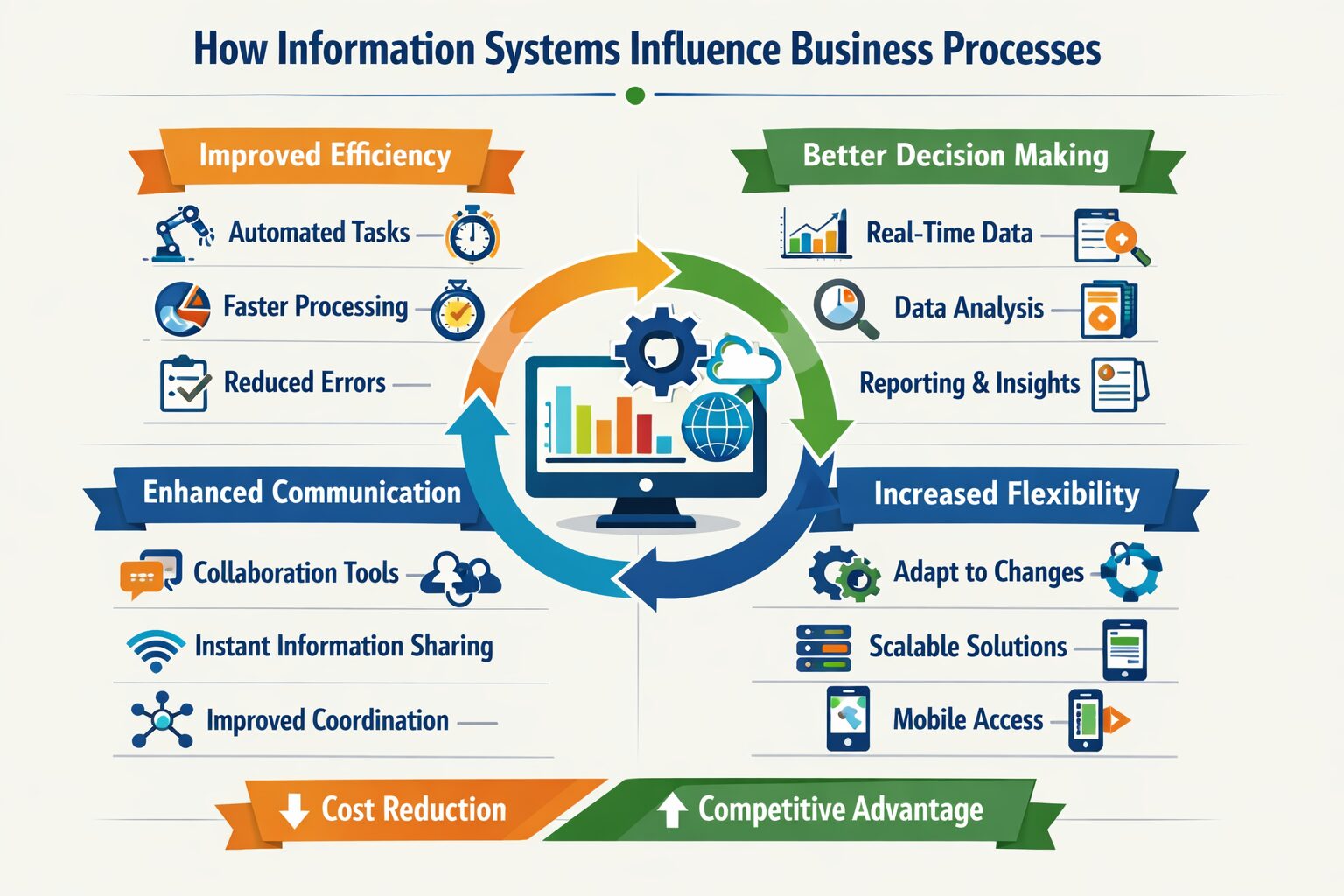
Information systems play a pivotal role in supporting and improving business operations through various functions:
- Data Management: Information systems enable businesses to collect and manage vast amounts of data efficiently. This data can be analyzed to identify trends, customer preferences, and operational inefficiencies.
- Communication: These systems facilitate communication within and between departments, ensuring that all stakeholders have access to the information they need to make informed decisions.
- Automation: Routine tasks can be automated through information systems, reducing manual labor and minimizing errors. For example, automated billing systems can streamline invoicing processes.
- Decision Support: Information systems provide tools for data analysis and reporting, helping management make informed decisions based on real-time data.
- Customer Relationship Management: By utilizing CRM systems, businesses can track customer interactions, preferences, and feedback, leading to improved customer satisfaction and loyalty.
Advantages and Potential Drawbacks
While information systems offer numerous advantages, they are not without their challenges:
Advantages
- Increased Efficiency: Automation and streamlined processes reduce the time required to complete tasks, allowing employees to focus on higher-value activities.
- Enhanced Decision-Making: Access to real-time data and analytical tools enables better forecasting and strategic planning.
- Improved Customer Service: Information systems help businesses respond quickly to customer inquiries and manage relationships effectively.
- Cost Savings: By optimizing operations and reducing errors, businesses can achieve significant cost savings over time.
Potential Drawbacks
- Implementation Costs: The initial investment in hardware, software, and training can be substantial, particularly for small businesses.
- Complexity: As systems become more sophisticated, they can also become more complex, requiring ongoing maintenance and support.
- Data Security Risks: Storing sensitive information electronically poses risks related to data breaches and cyberattacks.
- Dependence on Technology: Over-reliance on information systems can lead to vulnerabilities if systems fail or become outdated.
Real-World Applications
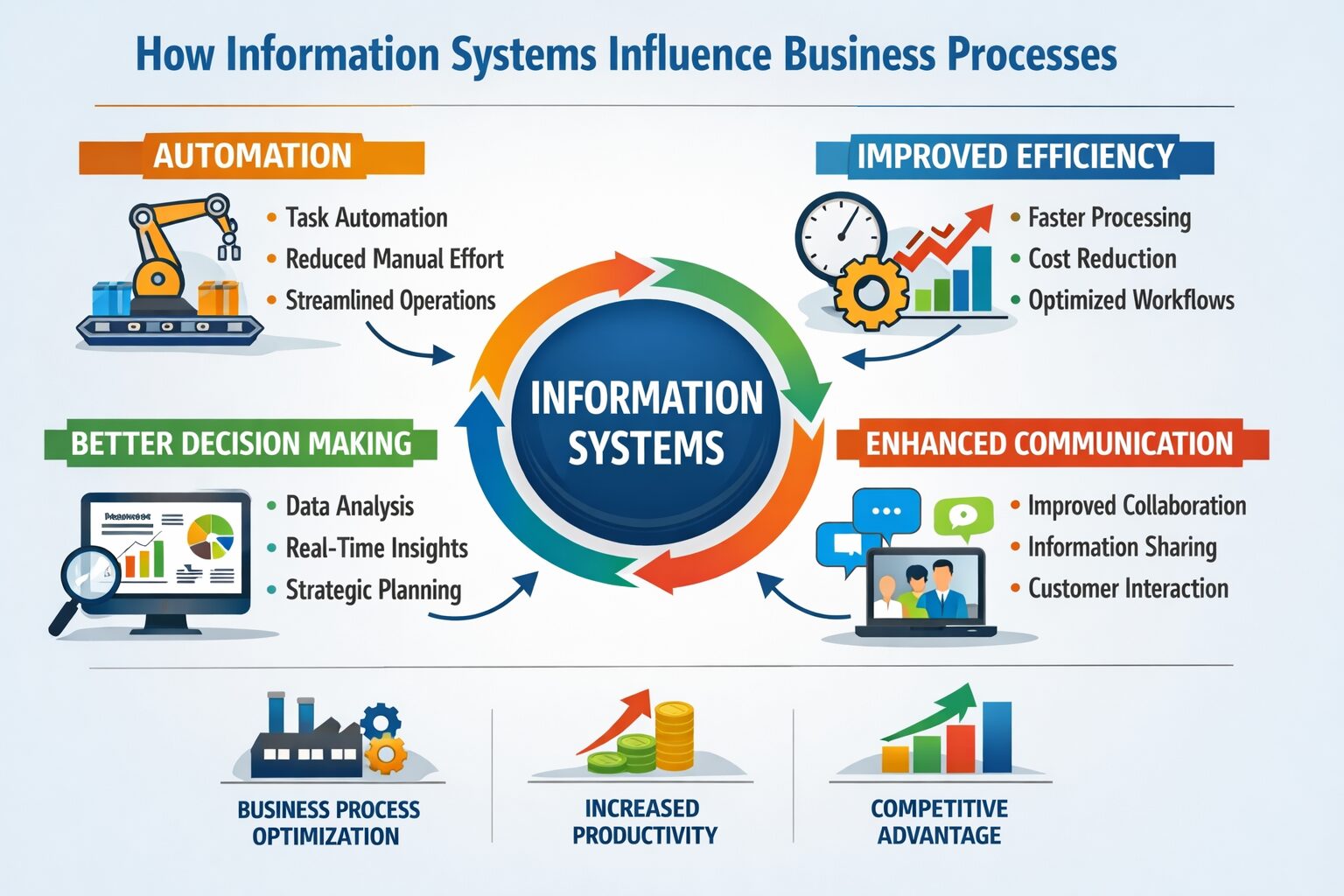
Information systems influence efficiency, decision-making, and competitiveness across various sectors:
- Retail: Inventory management systems help retailers track stock levels in real-time, ensuring that popular items are always available while minimizing excess inventory.
- Manufacturing: Production scheduling software optimizes manufacturing processes, reducing downtime and improving throughput.
- Healthcare: Electronic health records improve patient care by providing healthcare professionals with immediate access to patient histories and treatment plans.
- Finance: Financial institutions use information systems for risk analysis and fraud detection, enhancing security and customer trust.
By integrating information systems into their operations, businesses can not only improve their internal processes but also enhance their ability to compete in an increasingly digital marketplace.
Assessing Information Systems for Business Success
Evaluating an information system is a critical step for businesses looking to enhance their operations. The right system can streamline processes, improve decision-making, and boost competitiveness. However, choosing the wrong system can lead to wasted resources and missed opportunities. This section provides guidance on how to assess an information system, outlining key evaluation criteria and steps for implementation.
Evaluation Criteria
When assessing an information system, businesses should consider the following criteria:
| Criteria | Description |
|---|---|
| Cost | Evaluate the total cost of ownership, including initial setup, licensing, maintenance, and training expenses. |
| Scalability | Determine whether the system can grow with your business, accommodating increased data volume and user load without significant performance degradation. |
| Compatibility | Assess how well the system integrates with existing tools and platforms, ensuring seamless data flow and minimizing disruption. |
| Security | Examine the security features of the system, including data encryption, user authentication, and compliance with industry regulations. |
| User Adoption | Consider the ease of use and training requirements, as user-friendly systems are more likely to be adopted by staff. |
Steps for Implementation
Implementing a new information system involves several key steps:
- Needs Assessment: Identify the specific needs of your organization by consulting with stakeholders and analyzing current processes.
- Research and Selection: Explore various information systems that meet your criteria, comparing features, costs, and user reviews.
- Pilot Testing: Before full implementation, conduct a pilot test with a small group of users to identify any issues and gather feedback.
- Training: Provide comprehensive training for all users to ensure they understand how to utilize the system effectively.
- Full Deployment: Roll out the system organization-wide, ensuring that support is available for troubleshooting and questions.
- Monitoring and Evaluation: Continuously monitor the system’s performance and gather user feedback to make necessary adjustments and improvements.
Challenges in Implementation
While implementing an information system can yield significant benefits, businesses may encounter several challenges:
- Resistance to Change: Employees may be hesitant to adopt new systems, especially if they are accustomed to existing processes. Effective change management strategies are essential to address this resistance.
- Data Migration Issues: Transferring data from legacy systems to new platforms can be complex and may lead to data loss or corruption if not handled carefully.
- Integration Difficulties: Ensuring that the new system works seamlessly with existing software and hardware can be a significant hurdle, requiring technical expertise.
- Ongoing Maintenance: Information systems require regular updates and maintenance, which can strain IT resources and budgets.
Improvement Strategies
To enhance the effectiveness of an information system, consider the following strategies:
- Regular Training: Offer ongoing training sessions to keep users updated on new features and best practices.
- User Feedback: Establish channels for users to provide feedback on the system, which can inform future updates and improvements.
- Performance Metrics: Define and monitor key performance indicators (KPIs) to assess the system’s impact on business processes.
- Technology Updates: Stay informed about advancements in technology and consider periodic upgrades to maintain competitiveness.
By carefully assessing the information system based on these criteria and following a structured implementation process, businesses can maximize the benefits of their technology investments while minimizing potential pitfalls.
Summary of Key Points
Information systems are essential for modern businesses, influencing various aspects of operations and decision-making. They consist of multiple components, including hardware, software, data, procedures, and people, all working together to enhance efficiency and competitiveness.
Importance of Information Systems
The relevance of information systems cannot be overstated. They provide businesses with the tools needed to manage data effectively, improve communication, automate processes, and support strategic decision-making. The integration of these systems leads to significant advantages, including:
- Increased operational efficiency
- Enhanced decision-making capabilities
- Improved customer service
- Cost savings through optimized processes
Supporting Statistics and Case Studies
Several studies highlight the importance of information systems in business:
- A report by McKinsey & Company found that companies that effectively leverage data analytics can improve their productivity by 5 to 6 percent.
- According to a survey by Deloitte, 83 percent of executives believe that investing in information technology is critical for their business strategy.
- A case study of a retail company that implemented an integrated information system showed a 30 percent reduction in inventory costs and a 20 percent increase in sales within one year.
Future Trends in Information Systems
As technology continues to evolve, several trends are expected to shape the future of information systems in the business world:
- Artificial Intelligence and Machine Learning: These technologies will increasingly be integrated into information systems, allowing for advanced data analysis and predictive modeling.
- Cloud Computing: The shift to cloud-based solutions will enable greater flexibility, scalability, and cost-effectiveness for businesses of all sizes.
- Increased Focus on Cybersecurity: As data breaches become more common, businesses will prioritize robust security measures to protect sensitive information.
- Real-Time Data Processing: The demand for real-time insights will drive the development of faster and more efficient information systems.
By understanding the significance of information systems and keeping abreast of emerging trends, businesses can position themselves for success in an increasingly digital landscape.