

Understanding Information Systems in Business
Information systems (IS) are integrated sets of components for collecting, storing, and processing data to provide information, knowledge, and digital products. In a business context, these systems are crucial for decision-making, coordination, control, analysis, and visualization. The primary purpose of an information system is to support operations, management, and decision-making within an organization. This relevance extends across various organizational sizes, from small startups to large enterprises, as they all rely on data to drive their strategies and operations.
The Role of Information Systems
Information systems serve multiple functions within a business environment. They facilitate the collection and analysis of data, enabling organizations to make informed decisions based on real-time information. For small businesses, information systems can streamline operations, reduce costs, and improve customer service by automating routine tasks and providing insights into customer behavior. In larger organizations, these systems are often more complex and integrated, supporting a wide range of functions from supply chain management to customer relationship management.
Applicability Across Industries
The versatility of information systems makes them applicable across various industries:
- Retail: Point-of-sale systems and inventory management software help retailers track sales and manage stock levels efficiently.
- Healthcare: Electronic health records (EHR) systems enhance patient care by providing healthcare professionals with immediate access to patient information.
- Manufacturing: Manufacturing execution systems (MES) optimize production processes by monitoring and controlling manufacturing operations.
- Finance: Financial information systems assist in budgeting, forecasting, and managing financial transactions.
- Education: Learning management systems (LMS) provide educational institutions with tools to deliver and manage online courses.
In each of these scenarios, information systems play a vital role in improving efficiency, enhancing customer satisfaction, and driving innovation. For auto owners, understanding how these systems function within the automotive industry can lead to better service experiences and informed choices about vehicle maintenance and purchases.
Why Information Systems Matter
The relevance of information systems in today’s business landscape cannot be overstated. As organizations collect vast amounts of data, the ability to analyze and leverage this information becomes a competitive advantage. Information systems enable businesses to respond quickly to market changes, optimize operations, and enhance customer engagement. For auto owners, the integration of information systems in automotive services can lead to more personalized experiences, such as tailored maintenance schedules based on driving habits and vehicle performance data.
In summary, information systems are essential tools that empower businesses to operate efficiently and effectively. Their applicability across a wide range of industries highlights their importance in both small and large organizations, making them a cornerstone of modern business strategy.

Functionality of Information Systems in Business
Information systems operate through a combination of hardware, software, data, procedures, and people. These components work together to collect, process, store, and disseminate information, ultimately supporting business operations and decision-making. Here’s a breakdown of how these systems function and their critical role in enhancing business processes.
Key Components of Information Systems
- Hardware: This includes physical devices such as computers, servers, and networking equipment that facilitate data processing and storage.
- Software: Applications and programs that process data and provide functionality for users, such as databases, enterprise resource planning (ERP) systems, and customer relationship management (CRM) software.
- Data: The raw facts and figures that are processed to generate meaningful information. Effective data management is crucial for accurate analysis and reporting.
- Procedures: The policies and methods that govern how data is collected, processed, and disseminated within the organization.
- People: The users who interact with the information system, including IT professionals, managers, and end-users who rely on the system for decision-making.
Supporting Business Operations
Information systems play a pivotal role in improving business operations across various sectors. Here are some specific ways they contribute:
- Efficiency: Automation of routine tasks reduces manual effort and minimizes errors. For instance, inventory management systems can automatically track stock levels and reorder products when necessary, saving time and resources.
- Decision-Making: Information systems provide real-time data analytics, enabling managers to make informed decisions quickly. For example, sales dashboards can offer insights into customer purchasing trends, allowing businesses to adjust their strategies accordingly.
- Communication: Enhanced communication tools within information systems facilitate collaboration among teams. Project management software can streamline task assignments and updates, ensuring everyone is on the same page.
- Customer Engagement: CRM systems help businesses manage customer relationships by tracking interactions and preferences. This information can be used to tailor marketing campaigns and improve customer service.
Advantages of Information Systems
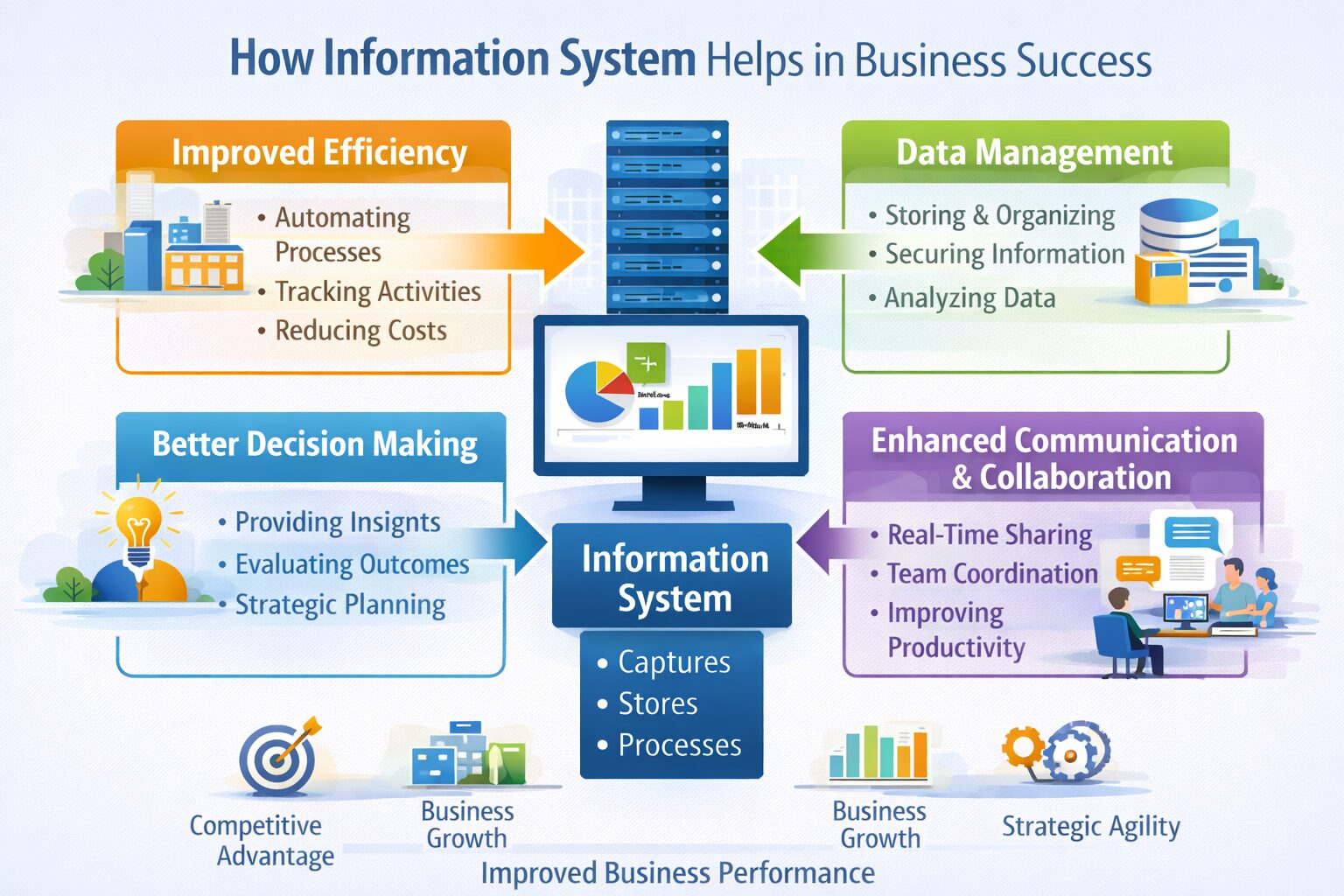
The implementation of information systems brings several advantages to businesses:
- Improved Data Management: Efficient data storage and retrieval processes enhance the quality of information available for decision-making.
- Cost Savings: Automation reduces operational costs and increases productivity, allowing organizations to allocate resources more effectively.
- Competitive Advantage: Businesses that leverage information systems can respond more quickly to market changes, giving them an edge over competitors who rely on traditional methods.
- Scalability: Information systems can be scaled to accommodate growth, making it easier for businesses to expand without significant disruptions.
Potential Drawbacks
Despite the numerous benefits, information systems also come with potential drawbacks:
- Cost of Implementation: The initial investment in hardware, software, and training can be significant, particularly for small businesses.
- Complexity: Managing and maintaining information systems can be complex, requiring specialized skills and knowledge that may not be readily available within the organization.
- Security Risks: With increased reliance on digital systems comes the risk of data breaches and cyberattacks, necessitating robust security measures.
- Resistance to Change: Employees may resist adopting new systems, especially if they are accustomed to traditional methods, leading to potential disruptions during the transition period.
Real-World Applications
Information systems have a profound impact on various industries, influencing efficiency, decision-making, and competitiveness:
- Retail: Retailers use point-of-sale systems to track sales in real time and analyze customer purchasing behavior, leading to better inventory management and targeted marketing strategies.
- Manufacturing: Advanced manufacturing systems utilize data analytics to optimize production schedules, reduce downtime, and improve product quality.
- Healthcare: Hospitals implement electronic health records (EHR) systems to streamline patient care, reduce errors, and improve communication among healthcare providers.
- Finance: Financial institutions employ information systems for risk assessment, fraud detection, and regulatory compliance, enhancing their operational efficiency and security.
In summary, the functionality of information systems is integral to modern business operations. By understanding their components and applications, organizations can harness the power of data to drive growth and maintain a competitive edge in their respective industries.
Assessing Information Systems for Business Use
Evaluating an information system is crucial for ensuring that it meets the specific needs of an organization. The assessment process involves analyzing various criteria, including cost, scalability, compatibility, security, and user adoption. By carefully considering these factors, businesses can make informed decisions about which systems to implement or upgrade.
Evaluation Criteria
When assessing an information system, the following criteria should be taken into account:
| Criteria | Description | Importance |
|---|---|---|
| Cost | Initial investment, ongoing maintenance, and operational costs. | High |
| Scalability | Ability to grow and adapt as the business expands. | Medium |
| Compatibility | Integration with existing systems and technologies. | High |
| Security | Measures in place to protect data and ensure compliance. | High |
| User Adoption | Ease of use and the likelihood of employees embracing the system. | Medium |
Steps for Implementation
Implementing an information system requires careful planning and execution. Here are the steps businesses should follow:
- Define Objectives: Clearly outline what you want to achieve with the new system, such as improving efficiency or enhancing customer service.
- Conduct a Needs Assessment: Evaluate current processes and identify gaps that the new system should address.
- Research Options: Investigate various information systems available in the market that align with your objectives and needs.
- Evaluate Vendors: Assess potential vendors based on the evaluation criteria mentioned earlier, including cost, scalability, and security.
- Plan Integration: Develop a detailed plan for integrating the new system with existing technologies, ensuring minimal disruption to operations.
- Training: Provide comprehensive training for employees to facilitate user adoption and ensure they are comfortable with the new system.
- Monitor and Optimize: After implementation, continuously monitor the system’s performance and make adjustments as needed to optimize its effectiveness.
Challenges Businesses Might Face

While implementing an information system can bring significant benefits, several challenges may arise:
- Resistance to Change: Employees may be hesitant to adopt new technologies, leading to decreased productivity during the transition period.
- Integration Issues: Existing systems may not easily integrate with new solutions, resulting in data silos and inefficiencies.
- Budget Constraints: The initial costs of implementing a new system can strain budgets, especially for small businesses.
- Data Security Concerns: Transitioning to a new system may expose sensitive data to security risks if not managed properly.
- Ongoing Maintenance: Information systems require regular updates and maintenance, which can be resource-intensive.
Improvement Strategies
To enhance the effectiveness of an information system, consider the following strategies:
- Regular Training: Offer ongoing training sessions to keep employees updated on system features and best practices.
- Feedback Mechanisms: Establish channels for employees to provide feedback on system performance and usability.
- Performance Metrics: Define and track key performance indicators (KPIs) to measure the system’s impact on business operations.
- Upgrade Path: Stay informed about updates and new features from the vendor to ensure the system remains current and effective.
By systematically assessing information systems using these criteria and steps, businesses can ensure they select and implement solutions that align with their goals and enhance overall performance.
Importance of Information Systems in Business
Information systems have become integral to modern business operations, providing the necessary tools for data management, decision-making, and operational efficiency. Their role cannot be overstated, as they directly influence the ability of organizations to compete in today’s fast-paced market.
Key Benefits
- Enhanced Efficiency: Automation of repetitive tasks and streamlined processes reduce operational costs and time.
- Improved Decision-Making: Access to real-time data analytics allows managers to make informed decisions quickly.
- Increased Customer Engagement: Customer relationship management systems help businesses tailor their services to meet customer needs effectively.
- Competitive Advantage: Organizations that leverage information systems can respond faster to market changes, gaining an edge over competitors.
Supporting Statistics
Several studies underscore the importance of information systems in driving business success:
- A study by McKinsey found that companies that effectively use data analytics are 23 times more likely to acquire customers and 6 times more likely to retain them.
- According to a report by Gartner, organizations that implement advanced information systems can see a productivity increase of up to 30%.
- Research from IDC indicates that businesses leveraging cloud-based information systems can reduce IT costs by 30% while improving scalability.
Case Studies
Real-world applications demonstrate the effectiveness of information systems:
- Amazon: The e-commerce giant utilizes sophisticated information systems for inventory management, customer tracking, and personalized marketing, contributing to its dominance in the retail sector.
- Walmart: Walmart employs advanced data analytics to optimize supply chain management, resulting in significant cost savings and improved inventory turnover rates.
- Netflix: Netflix uses information systems to analyze viewer preferences, allowing for personalized content recommendations that enhance user engagement and retention.
Future Trends
As technology continues to evolve, the landscape of information systems in business is expected to change significantly:
- Artificial Intelligence: The integration of AI into information systems will enhance data analysis capabilities, leading to more accurate forecasting and decision-making.
- Cloud Computing: The shift towards cloud-based solutions will continue, offering businesses greater flexibility, scalability, and cost-effectiveness.
- Data Privacy and Security: As cyber threats increase, businesses will prioritize robust security measures and compliance with regulations to protect sensitive information.
- Remote Work Solutions: The rise of remote work will drive demand for information systems that facilitate collaboration and communication among distributed teams.
In summary, the role of information systems in business is crucial for driving efficiency, enhancing decision-making, and maintaining competitiveness. As organizations continue to adapt to changing market conditions, the importance of these systems will only grow, shaping the future of business operations.